Authors
 faithspear

A Story of Two Brothers: Rob and Roddy
Over a period of 3½ years writing about the Imprisonment for Public Protection (IPP) sentence, and almost 20 articles later this may become my most important piece. Without overstating this issue, I am now persuaded that IPP is a matter of life and death. Allow me to explain why.
What follows is a long-form article. This is deliberate because it portrays the lives of real people. I have chosen to include the views and recollections of Roddy, over a span of time, shared with me in the hope that his brother Rob will not become yet another death in custody statistic.
Growing up in a rural village, their childhood was difficult and could be seen as abusive.
As a teenager Rob learnt to play the guitar and was a drummer in a band playing at various venues across England and Wales and remained an active musician right into adulthood.
Drinking socially, smoking cannabis and dropping acid had become part of Rob’s teenage years and early adulthood. His working life started as a vehicle accident repair technician where he developed an interest in fabrication, working as a highly skilled fabricator with various engineering businesses. After some short relationships and at least one long term relationship Rob eventually married a woman who had three boys from a previous relationship. To this day, two boys from his marriage speak highly of him.
At some point before marriage, he stopped dropping acid and smoking cannabis but was still drinking socially and at family home gatherings. But Rob’s drinking became problematic to the point that his marriage broke up and he lost his employment. Alcohol consumption increased and Rob resumed taking cannabis products.
Rob recognised that he had problems and sought help from his GP and other medical professionals. He was diagnosed as being alcohol dependant and was recognised by medical professionals that he was suffering with some form of mental health impairment. On more than one occasion Rob was admitted to a mental health hospital and was also an outpatient with mental health services.
There were concerns regarding suicide and the mental health services considered various diagnoses. Rob was prescribed various anti-psychotic medication and was taking the prescribed medications.
While under the care of mental health services, he worked as a volunteer in the community, grass cutting, hedge cutting and strimming, using his own petrol-powered equipment to do the community work.
He still played as a band member and was active on the pub social scene. However, during this time, he became involved in an on/off relationship with a person who was to later become the sole victim of his wrongdoing.
Roddy recollects:
“In August 2009, my brother’s on/off partner informed him that she was having an intimate relationship with someone else. My brother was aggravated and became distressed at this confession. He got intoxicated and sent voice and text messages threatening to burn his victim and he then went to his victim’s home where he continued to threaten to burn her. She ran to a neighbour, called the police and stated that she felt in fear for her life.”
Rob has always acknowledged that he made threats. He has maintained that his intention was never to kill his victim, he has said that he wanted his victim to have an understanding and feel the distress that he was feeling! His victim stated that she felt in fear for her life.
When arrested, Rob claimed that the police should have referred him to mental health services by way of sectioning under The Mental Health Act. Instead he was put before a Magistrates Court which chose to refer the matter to Crown Court rather than handing him a hospital order, even though he had no previous convictions other than for a speeding offence. Rob was charged with threat to kill. He didn’t agree with the entirety of the victim statements but recognised and accepted his wrongdoing.
What is very clear here and very sad is that there were three missed opportunities to section Rob: shortly after arrest by police; at the Magistrates Court and at the Crown Court. This set Rob on a trajectory that should never have occurred.
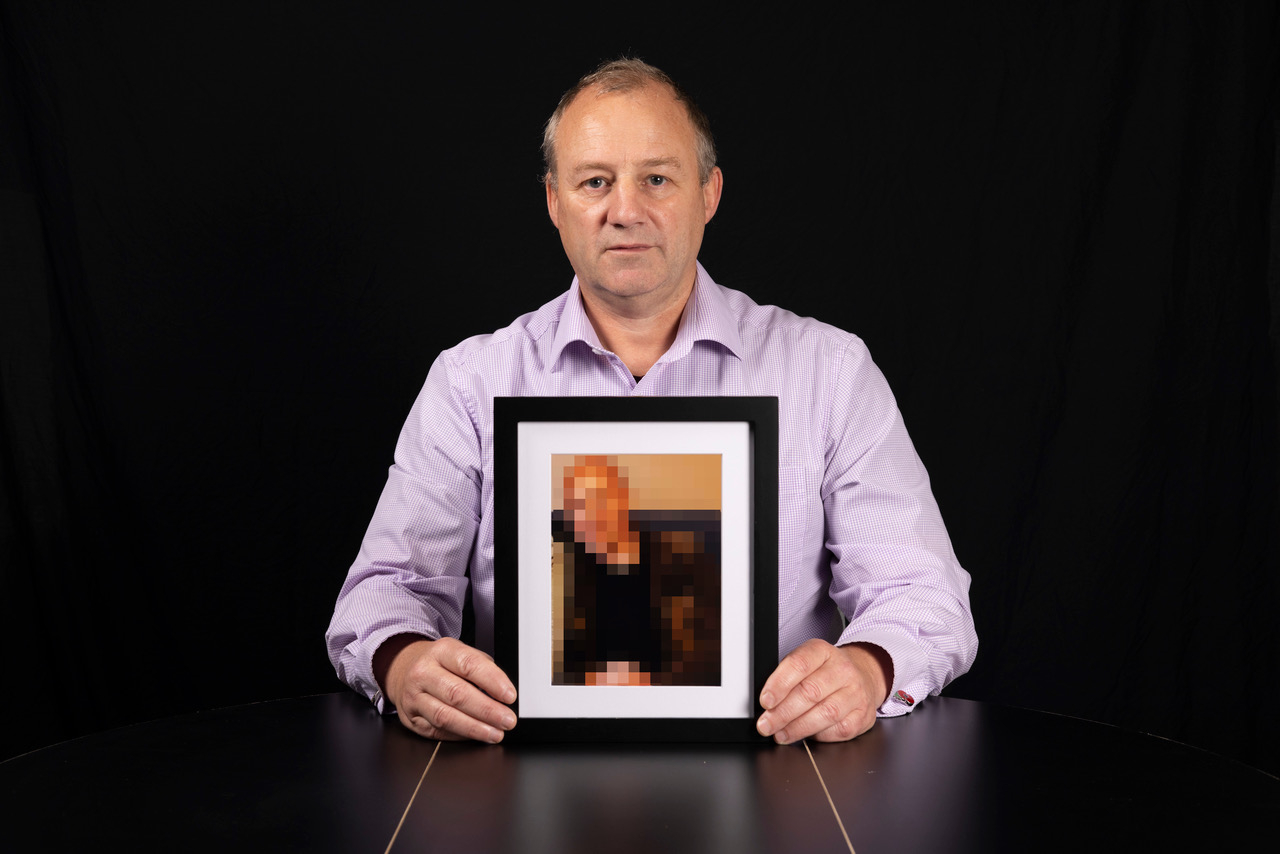
Roddy continued:
“My brother entered a guilty plea. This meant there was no trial for the victim, my brother or the court to endure. My brother’s mental health history was not considered by the crown court, and a mental health professional told the court that there were no significant mental health factors to be concerned with.
However, in fact my brother was an outpatient with mental health services and had been prescribed and was taking anti-psychotic medication that should not be prescribed to an alcoholic who was intoxicated at the time of wrongdoing and was also known to take cannabis products with a history of taking recreational opiates such as acid.”
It makes you question who this “mental health professional” was. Surely, they would have had access to medical records, and if so, why did they choose to ignore or disregard those clinical notes?
In the Crown Court, Rob was handed an Imprisonment for Public Protection (IPP) sentence with a tariff of 3 years reduced to two and a half years on appealing the sentence tariff.
As far as Roddy is aware, from the point of arrest and so far, Rob stopped consuming alcohol and other recreational drugs, and has remained sober and drug free.
HM Prison and Probation Service (HMPPS) staff did not provide Rob with his prescription medication at the strict time he was instructed to take it and eventually stopped the prescription medication completely.
Rob concluded that if you mix a cocktail of alcohol, recreational drugs and anti-psychotic medication coupled with the emotional effects of a dysfunctional relationship with his victim, all within the context of being unfaithful and/or with an interest in polyamorous intimacy, you have a recipe for him or anyone else to act un-characteristically dangerous at the time of committing these acts of wrongdoing. Rob has since refused to take any anti-psychotic medication that healthcare professionals might prescribe.
During his two-and-a-half-year tariff period, Rob was fully engaged with the HMPPS regime, completing the 12 Step Alcohol Dependency Treatment Programme and engaging in various other activities such as Alcoholics Anonymous, Education, Gymnasium, Changing Tunes music group, Chaplaincy, Koestler Awards and many other productive initiatives along with producing and playing a lead part in a Les Misérables musical theatre performance attended by the then Duchess of Cornwall, now Queen Camilla.
Rob also achieved the Enhanced Incentivised Earned Privileges (IEP) award, often seen as coercive and controlling measures used by HMPPS, and could therefore see no reason as to why he would not be released from prison.
Roddy expanded:
“At or near his tariff expiry and on the run up to his first Parole, HMPPS staff stated that he would need to complete a Healthy Relationship Programme (HRP). This was a Ministry of Justice (MOJ)/HMPPS Offender Behaviour Programme (OBP) that my brother did not qualify for as his Offender Violence Predictor scores (OVP) were too low.
Later this programme was discredited and shut down as it was found to be ineffective and arguably delivered the opposite of what it was supposed to achieve. My brother was shoehorned onto the HRP and found himself distressed and unable to cope with the course and some of the other attendees. Rob was removed from the HRP programme, and HMPPS staff blamed him for his distress.
My brother did not get his Parole direction for release.”
It was around this point that Rob realised an IPP sentence was a life sentence and concluded he was never going to be released. The effect turned out to be devastating; he withdrew into himself, stopped his personal care and stopped engaging with HMPPS, attempting suicide on at least two occasions and asking a prisoner to throttle him to death. On another occasion he placed a chair leg across his neck asking another prisoner to jump onto the chair leg. These were acts of desperation.
Roddy explained what happened next:
“HMPPS Safer Custody contacted me stating that they had become concerned for the welfare of my brother. I decided to visit.
This was to be my first ever visit to someone in a prison. Once in the visits hall, HMPPS staff informed me to make my way to the table and chairs of the person I had come to visit. I couldn’t see my brother, so I was instructed to go to a chair and table identified by an alpha numeric code. A person was sat on a chair at the table. It was my brother. I didn’t even recognise him, he was unkept, emaciated, grimy and grubby. He looked like the depictions of Jesus shown nailed to the cross. He wouldn’t give any eye contact, was on a frightened hyper vigilant alert looking around the visits hall and I couldn’t get him to engage in any coherent conversation or accept an offer of food and drink from the visits hall tuck shop. Staff called time on the visit, and I left and broke down in tears from seeing my brother in such a terribly neglected physical and mental state.”
Eventually, Rob was transferred from prison to a low secure mental health hospital, the same hospital he had been admitted to when he had sought help from his GP. But this time he required physical treatments before they could start any mental health treatments. He was transferred to a hospital to have an ingrowing toenail surgically removed; it had grown so far up into his foot that amputation of the foot was considered. He was also taken to a dental hospital to deal with some issues regarding the neglect of oral care.
Back at the low secure hospital, Rob was so emaciated that his body couldn’t process solid food, which meant that he had to be fed on gels. Recovery was slow, nevertheless he started to engage and receive visitors. He prepared and cooked meals, trained in the hospital gym, started playing guitar and engaged in other mental health therapies. The hospital staff, probation staff, a social worker, family and a friend all participated with getting Rob well.
A community reintegration package was developed, and Rob was informed that this could not be implemented until after he had been returned to prison and then transferred from prison back to the hospital. He was led to believe that he would go back to prison for six months and then be returned to hospital. But he was transferred back to prison and not returned to the hospital.
Rob phoned Roddy from prison in a distressed state.
At or just before the six-month period of having been returned to prison, HMPPS staff informed Rob that he was to be placed on an Offender Behaviour Programme (OBP) called Kaizen. He informed staff he did not qualify to do Kaizen as his Offender Violence Predictor scores (OVP) were too low and that he was to be returned to hospital for reintegration into the community.
Roddy picks up the story:
“This led to some form of altercation between my brother and several HMPPS staff. Up to this point, my brother’s incarceration had been in the closed category C training prisons. I and others visited my brother during this period, and my brother kept in contact with me and with his support network through telephone calls and ‘email a prisoner exchanges’.”
The altercation led to a regressive move into the category B prison estate where the Kaizen OBP was available. Rob refused to do Kaizen and this OBP has since been removed as it was found to be ineffective in much the same way as the HRP OBP.
Continuing to maintain that he did not qualify for any HMPPS OBP’s due to his OVP scores being so low, Rob refused to do any OBP that HMPPS suggested.
Adjudications followed with periods in segregation, Rob was downgraded to the basic IEP level and moved around different cells and wings. He was beaten on several occasions with one beating resulting in a hospital admission where 17 stitches were needed to Rob’s head.
HMPPS Forensic Psychology Services claimed that Rob had what they call an Offender Personality Disorder (OPD). The MoJ OPD diagnosis is highly questionable as the criteria is loose and ambiguous. Once on this pathway the label is hard to shift. It is not listed in either the Diagnostic Statistical Manual of Mental Health Disorders (DSM) or the International Classification of Diseases Manual (ICD).
In fact, it was devised by the MoJ, which recruited Forensic Psychologists and trained them through their own programme. In other words, the MoJ created an OPD diagnosis purely for the purpose of justifying the Offender Behaviour Programmes (OBP) and the OBP pathway. Furthermore, the Forensic Psychologists own professional body being the British Psychological Society (BPS) have been critical of this, stating on more than one occasion that Forensic Psychologists and the OPD diagnosis is causing IPP prisoners harm.
Huge questions arise when you realise that 96% of IPP prisoners receive this OPD diagnosis, a blanket and sham diagnosis, which has also been referred to as an abuse of power, especially when you also discover it was invented by politicians and officials and not through grounded clinical decision.
During this time, Roddy continued to visit his brother. They exchanged emails and Rob phoned both his brother and others who had been a support.
Then another transfer occurred. Rob was sent to a Long-Term and High Security Estate (LTHSE) Category B prison. He continued to disengage accepting that this type of prison is where he will spend the rest of his life.
More distress came when he was refused attendance at his mum’s funeral or seeing her in the funeral directors Chapel of Rest. At this point he was still engaged with other prisoners around him and accepted visits from Roddy but claimed he felt too unsafe to leave his cell which meant that on occasions he didn’t turn up for visits.
For Roddy, this was a 600-mile round road trip, and contact remained via email and phone.
After several years in the category B LTHSE, Rob was transferred to a private medium secure hospital. But this was seen as another regressive move.
Roddy explains:
“My brother is not best pleased and questions as to the reasons why, and demanding he is returned to prison. The hospital claim that they cannot diagnose my brother as he is not engaging and is refusing to take anti-psychotic medication. It is around this time that I discover the parole process is paused when a prisoner is transferred to hospital. The United Nations Working Group on Arbitrary Detention experts claim that suspending parole when a prisoner is in hospital is discriminatory. I and others visit my brother in hospital, telephone communication becomes difficult and email communication is not facilitated. After several months, my brother is transferred on another regressive move to the category A LTHSE.”
More anguish followed as Rob became distressed with this further regressive move; Rob believed he will be killed if incarcerated in a category A prison. Calls from HMPPS and the chaplain, and confirmation from a call from Rob, informed Roddy where his brother was held.
But this was the last phone call, there were no more emails or accepting visits either, Rob totally disengaged and housed within the Healthcare unit of the prison.
A call from the Chaplin informed Roddy that his brother, now on an induction wing was too frightened to leave his cell, even for slopping out. Due to no in cell sanitation a bucket is supplied for any waste. However, Rob accepted the chaplain’s offer to escort him.
An arrangement by Roddy for an in-person visit resulted yet again in a no show. The Chaplain explained that Rob had stopped engaging with anyone and was on the Healthcare wing and he suggested Roddy arrange another in-person visit and if Rob didn’t show again then arrangements could be made for Roddy to actually visit his cell.
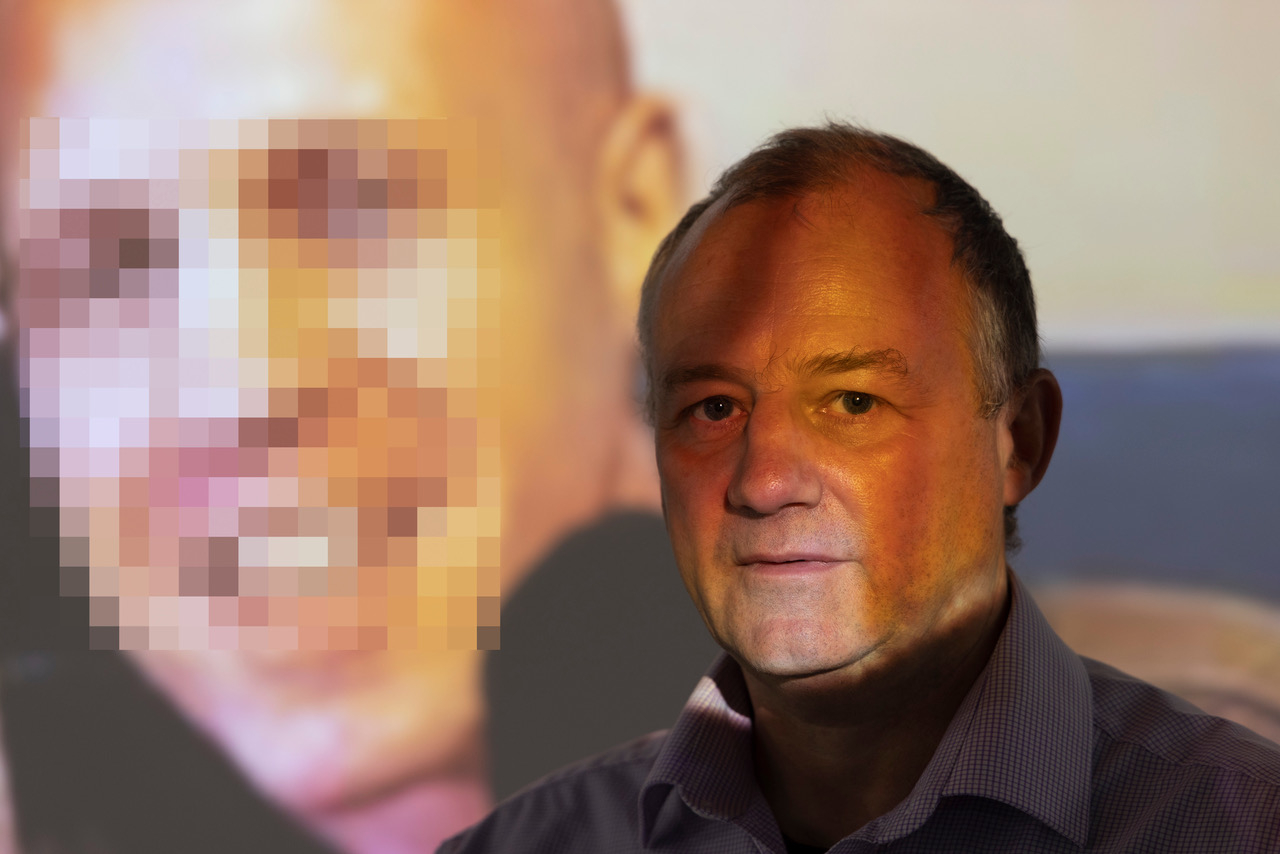
Roddy recollects:
“I’m met in the visit hall by my brothers HMPPS Assessment Care in Custody Treatment (ACCT) manager and taken to the prison healthcare unit, my stress and anxiety levels are through the roof. I’m ushered into a side room and put in front of a panel of HMPPS staff comprising the ACCT manager, a Forensic Psychologist, a Mental Health worker, a Safer Custody representative, the Prison Chaplain, and an Independent Monitoring Board (IMB) member. The ACCT manager proceeds to inform everyone what has been observed and what has happened with my brother. I cannot recall what other comments might have been made by the other panel members. However, I feel that I am there as a last-ditch effort to try and get my brother to engage. I recall informing the panel about the disgraceful way in which the MOJ and HMPPS treat my brother and other IPPs and that what we need are whistleblowers. I inform the panel that they will not whistle blow on the mistreatment of IPPs when their salaries depend upon it and I direct most of what I am saying to the forensic psychologist asking her not to take personally what I’m saying as I’m directing what I’m saying at the forensic and mental health professions.
I’m taken to the healthcare cell to see my brother. I’m almost overwhelmed with what I see. My brother is sat in the middle of a bed, feet on the floor staring at the floor dressed in filthy grey prison clothes. Strewn across the floor in front of my brother are what appears to be personal effects contained in opaque plastic bags. Standing in the open-door space is the HMPPS Safer Custody representative and just inside the doorway is the ACCT manager and in front of him is the prison chaplain. I can’t smell anything as I believe my senses are overwhelmed to the point that my sense of smell has shut down.
Before sitting on the bed next to my brother, I asked if it was okay for me to sit on the bed next to him. He did not respond so I informed him that I was going to sit on the bed next to him. I tried to get him to engage in conversation, I do not recall what I said. I did not get any response. I asked my brother if I could put my arm across his shoulders. He did not respond. I put my arm across his shoulders. I asked my brother if I could give him a hug. He did not respond. I hugged him and sat on the bed next to him with my arm across his shoulders and continued trying to get him to engage. He did not respond. I started to refer to The Bible. He responded by grizzling Stop, Stop, Stop. I stopped. I remained sat in silence with my brother, observing the awful environment that he was incarcerated within and had many intrusive thoughts running through my own mind. The chaplain broke the silence stating he was needed elsewhere and said goodbye. Rob remained sat staring at the floor. We sat a while longer in silence until two staff in the doorway stating it was time for me to leave, and I was ushered back to the side room with all the panel members other than the prison chaplain. I was too distressed to say much and felt that it best to say very little other than to thank the staff for facilitating the visit. The ACCT manager escorted me back through the prison to the visit hall and I left with a lot of mixed emotions.”
Roddy later found out that he had been used by HMPPS to close the ACCT so that his brother could be discharged from prison healthcare and transferred onto a regular prison wing. This was very troubling for Roddy who then sought privately funded counselling for himself to help deal with the trauma caused by this dreadful situation.
Yet again another no show at a visit, no phone calls and no response to emails led Roddy to believe Rob was still disengaged. Roddy was informed by a member of staff that Rob didn’t want to see him. When pressed for more information that same member of staff said he had never met Rob, but would go to his cell and ask him if he would attend the visit. News came back that Rob just grunted when asked about the visit, this was interpreted as a No.
Roddy asked if his brother was self-isolating. Wing staff didn’t think so as his cell was neat and tidy and he collected his meals without engaging with anyone. Yet staff hadn’t specifically looked at the board or asked the wing staff if he was self-isolating. This was a contrast to the chaotic state of Rob’s cell previously when Roddy was escorted to it by members of staff.
Roddy’s brother Rob is now fourteen and a half years beyond tariff and he in his eighteenth year of continuous incarceration for making threats whilst in a state of personal distress. Roddy gets no response from his brother from emails and information he sends regarding IPP prisoners.
This month Roddy has learnt that Rob has been moved yet again to a hospital. There has been no communication with the family as to this move or reasons why. Meanwhile, Roddy’s name as next of kin has been removed, it is unclear if this is just temporary as how would else would Roddy learn of his brother’s condition or even visit him?
I have found this to be a remarkable story. As it sinks in, we must all be mindful that there are hundreds more stories where families and friends serve the sentence alongside their loved ones. Roddy will never give up on his brother Rob or other IPP prisoners and their families.
Prevention of Future Deaths
This tale of two brothers culminates in a call to real action. IPP prisoners have died in custody, that is they have died by suicide, signalling that in their cases the sheer mental attrition proved too much for them to bear any longer.
Roddy does not want this for his brother. Why wait for someone else to die, surely something must be done now. The system is not only setting people up to fail, but in reality, is the system as it stands setting people up to die?
According to Gov.uk, Coroners have dealt with approximately 30,000 inquests so far this year, of which 377 resulted in them issuing a Regulation 28: Report to Prevent Future Deaths. This is within the coroners’ legal powers, and which are publicly available online. Coroners may issue their report to anyone the coroner believes must define the steps they will take to prevent future deaths, and who are given 56 days to reply.
Among them are four inquests concerning IPP prisoners which came to my attention whilst writing this piece, two from 2026. What I found was astoundingly chilling. In the small sample where a Regulation 28 Report on Prevent Future Deaths (PFD) was issued by the coroner, the coroner took care to define the harm that IPP causes.
In the investigation and inquest of Ronald Meikle aged 47 who died on 30 April 2024 in custody at HMP Woodhill, the PFD issued by Sean Cummings, Assistant Coroner for the coroner of area of Milton Keynes, under Concern 7, Mr. Cummings wrote:
“I am concerned that Mr Meikle’s IPP status was not sufficiently recognised as a material risk factor requiring structured support, regular review and coordinated care.”
The reply from NHS Central and North West London NHS Foundation Trust (CNWL) dated 18 May 2026 was on time, 3 pages long, structured and considered. It was clinically grounded across all 12 concerns raised by the coroner. In their reply to Concern 7: Vulnerability of IPP prisoners, they wrote:
“We are explicitly considering IPP status within clinical risk assessment and referral processes. Because this is an explicit vulnerability, we can structure our clinical support packages and ensure regular reviews by the MDT.”
In sharp contrast to that reply, the reply from HM Inspectorate of Prisons dated 4 June 2026 was late, curt, unstructured and nonchalant. It read like a copy and paste from a playbook. It made no direct reference to the 12 concerns raised by the coroner, but instead generalised and mashed together everything in the context of an Urgent Notification process invoked by the Chief Inspector of Prisons. Tellingly, and this is a key point, the reply from HM Inspectorate of Prisons made zero reference to the fact that Mr Meikle was an IPP prisoner, nor answered the coroner’s concern 7 on the specific harm of IPP.
Regulation 28 Reports to Prevent Future Deaths are an existing instrument to obtain detailed answers and, as the title suggests, to ascertain clear actions to prevent future deaths.
So again, I ask, why wait for someone else to die? Something else must be done, and done now.
Glimmers of hope
When Andy Burnham became Prime Minister there was an acknowledgement from Mr. Burnham that IPP is unjust, and he declared that he would end IPP before the next Parliament. This has been welcomed. However, this is not the first announcement providing a glimmer of hope. Many such glimmers have come and gone without any tangible or meaningful change. Therefore, I will leave the last words to Roddy:
“I’m hoping he [Andy Burnham] remains true to his words and takes expedient action to end IPP which has been ruled by United Nations experts as torturous, cruel, inhuman, degrading conditions and that the incarceration of IPPs is arbitrary and therefore unlawful. I believe that Rob and most IPPs like Rob need trauma treatments without MOJ, HMPPS and parole interference. Hospital and Community Treatment Orders are in my view the way forwards. It’s been done for at least one IPP who is now a former IPP and IPP survivor.”
~
Photo credit: Copyright © Andy Aitchison Photographer. All rights reserved. Used with kind permission. To view his images, please visit the website www.andyaitchison.uk
First published by The Criminal Justice Blog 15 Nov 2026.
Article: Copyright © Faith Spear FRSA. All rights reserved.
Contributions: Copyright © Roddy Russell. All rights reserved.
~
References cited in this article
https://commonslibrary.parliament.uk/research-briefings/sn06086
https://assets.publishing.service.gov.uk/media/5a7ce48eed915d7c849ade01/glossary-programmes.pdf
https://www.psychiatry.org/psychiatrists/practice/dsm
https://www.who.int/standards/classifications/classification-of-diseases
https://www.psychiatry.org/psychiatrists/practice/dsm
https://www.judiciary.uk/courts-and-tribunals/coroners-courts/reports-to-prevent-future-deaths
https://www.legislation.gov.uk/uksi/2013/1629/part/7/made
https://preventabledeathstracker.net/
https://insidetime.org/newsround/andy-burnham-pledges-to-scrap-ipp-but-cancels-more-early-releases/
https://news.un.org/en/story/2023/08/1140237
~
References consulted and suggested further reading
https://www.gov.uk/guidance/offending-behaviour-programmes-and-interventions
https://www.gov.uk/guidance/hmpps-accredited-programmes
https://prisonreformtrust.org.uk/adviceguide/offender-management-and-sentence-planning/
https://www.gov.uk/guidance/offending-behaviour-programmes-and-interventions
https://www.gov.uk/algorithmic-transparency-records/hmpps-violence-in-prisons-estimator
https://www.judiciary.uk/guidance-and-resources/chapter-16-reports-to-prevent-future-deaths-pfds/
https://preventabledeathstracker.net/
https://www.bps.org.uk/forensic-psychologist-job-profile
https://doi.org/10.1348/135532503762871273
https://doi.org/10.1348/135532503762871255
https://www.bps.org.uk/research-digest/research-mental-health-prisoners-digested
https://www.psychologytoday.com/gb/basics/dsm
https://www.psychologytoday.com/gb/basics/international-classification-of-diseases-icd
~

‘Letting Abusers Out Early: Solving the Prison Crisis’ | Battle of Ideas 2026
Speech by Faith Spear FRSA given at Battle of Ideas, Parker Morris Hall, Westminster on Saturday 17 October 2026.
Let me start by saying prisons are in a permanent state of crisis in one form or another, I’ve never known a time when prisons were not in crisis. When things haven’t changed in decades then it becomes a permanent installation of the system, so let’s not kid ourselves that letting abusers out early will solve the prison crisis.
The problem of overpopulation and the risk of full capacity will still be there.
Between 1500 – 1800 prison cells across England and Wales sit completely empty/out of use because they lack the legally required automatic fire detection systems (AFD), according to James McEwen, Director General Chief Executive Officer HMPPS at Ministry of Justice.
This is approximately the number of cells you would find in a mega prison.
There is a £1.8B maintenance backlog. Gov Facility Services Limited (GFSL) with registered Office in Petty France took over when [the facilities management company] Carillion collapsed.
According to Companies House, there is 1 person with significant control – Secretary of State for Justice.
So does that mean the government contracting with the government to provide a government service?
Staff shortages
HMP Millsike opened last year and has over 300 cells unused due to staff shortages.
I think we need to look again at what prison is for. Punishment, rehabilitation?
Having visited every category of prison, what I see is that most prisons are basically warehouses of the vulnerable. As I have said before…
“We have to stop this madness of believing that we can change people and their behaviour by banging them up in warehouse conditions with little to do and not enough to eat and sanitation from a previous century.”
Early releases have put pressure onto a saturated Probation Service; it’s like digging a hole to fill another one.
Fran, the founder of Coming Home Project, told me that [in the first wave of early releases] on 1st October 2026, out of 20 women released early in the Greater Manchester area, 2 women were supported by them with hostel accommodation for the night and 3 women were released with “no fixed abode” where the prison couldn’t or wouldn’t confirm where they would end up.
So, here is a 6-point plan to reduce the prison population, written by Beccaria in 1764, in a period of enlightenment (we could do with another one):
“In order that punishment should not be an act of violence perpetrated by one or many upon a private citizen, it is essential that it should be public, speedy, necessary, the minimum possible in the given circumstances, proportionate to the crime, and determined by the law.”
Let me briefly unpack that:
Point 1: Public
Who can you believe, the so called “MoJ spokesperson”? So much is hidden. We need transparency and [real] accountability.
Point 2: Speedy
Courts are severely backlogged; magistrates have been given extra powers. But from my experience many magistrates don’t know what alternatives to custodial sentences look like in their area and have never stepped foot in a prison and neither have some judges I have met.
If we invest in the very fabric of the court buildings and cut the backlogs with extra sitting days, recruit new magistrates (according to Minister of State Sarah Sackman KC MP the target is 21,000 by 2029) can we then reduce the number of people on remand?
Point 3: Necessary
In section 57 of the Sentencing Code it says: The court must have regard to the five purposes of sentencing when determining sentence (over18’s).
The fourth purpose is: The protection of the public including victims of crime
It also states: Both community and custodial sentences can achieve all the purposes of sentencing. And yet, between 2013 and 2023 community sentences fell by 51%.
So, [here’s a question]: is letting abusers out early breaking or making a mockery of the sentencing code by not protecting the public and victims of crime?
Point 4: Minimum possible in the given circumstances
Instead, we have sentence inflation, public pressure and penal populism.
Point 5: Proportionate to the crime
I’m sure many of us are aware of the IPP sentence. Introduced under former Home Secretary David Blunkett in the Criminal Justice Act 2003, designed to show that New Labour was “tough on crime.”
Allowing courts to impose indeterminate prison sentences on offenders deemed a “risk,” keeping them in prison indefinitely without a fixed release date. Abolished in 2012, yet thousands remain [in prison] trapped under its legacy.
In 2022 House of Commons Justice Committee described the policy as “an unmitigated disaster that exacerbated severe overcrowding without improving public safety.”
Point 6: Determined by the law
The Sentencing Act 2026 was introduced to address crisis in the prison system and reform criminal justice practices based on the Independent Sentencing Review in 2025 led by David Gauke.
However, on the subject of prison reform, a former Permanent Secretary told me, and I quote:
“I cannot emphasise how strongly I agree with you. Whilst I could “spin” the company line that things are being done in the background I fear you would see through it. Be as it may, until the general public make it impossible for my ministers to ignore further, it will be a subject that shall remain taboo and talked about behind closed doors.”
To sum up, I don’t believe that letting abusers out early will solve the prison crisis.
And neither should you.
Thank you for listening.
~
Further helpful points:
Sentences have become longer: The Average Custodial Sentence Length (ACSL).
The overall ACSL for all types of offences has increased:
from 13.7 months in 2010 to 20.9 months in 2023
from 17.1 months in 2020 to 20.9 months in 2023
(Sentence inflation or change in types of crime)
Between 2013 and 2023 community sentences fell by 51%.
And yet [in section 57 of the Sentencing Code] it says: The court must have regard to the five purposes of sentencing when determining sentence (over18’s)
• The punishment of offenders
• The reduction of crime (including its reduction by deterrence)
• The reform and rehabilitation of offenders
• The protection of the public including victims of crime
• The making of reparation by offenders to persons affected by their offences
• The weight each purpose should be given will vary from case to case. Both community and custodial sentences can achieve all the purposes of sentencing.
Penal populism refers to a political approach where crime control policies and criminal justice decisions are driven primarily by political gain and public sentiment, rather than by empirical evidence, expert opinion, or long-term policy effectiveness.
In penal populism, politicians adopt an increasingly harsh, “tough on crime” stance to appeal to voters’ anxieties and moral outrage, assuming that the public favours strict punishment above all else.
I hear so much talk about building more prisons from the same people who previously said “we can’t build ourselves out of a crisis” But: HMP Millsike cost £264M to construct, and has an operating contract of £300M
Rounding down, that’s approx £0.5B for 1500 spaces (or £376,000 per cell)
Conservative Party has said it wants 50,000 extra spaces => £18.8B that’s not going to happen.
~

CAMPAIGNING LAWYER PETER STEFANOVIC BACKS NUCLEAR TEST VETERANS CALL TO PM ANDY BURNHAM FOR JUSTICE
Peter Stefanovic, a lawyer and CEO of CAMPAIGN FOR SOCIAL JUSTICE whose films have been watched over a billion times has produced another shocking video supporting nuclear test veterans’ latest campaign calling on Prime Minister Andy Burnham to honour his promise to end the Nuclear Test Veterans Scandal.

Andy Burnham’s Nuclear Test
LABRATS (Legacy of the Atomic Bomb Recognition for Atomic Test Survivors) have named their new campaign “Andy Burnham’s Nuclear Test”, given that in 2025 Burnham described the nuclear veterans scandal as “a criminal cover-up on an industrial scale”
This latest film by Stefanovic backing the nuclear test veterans fight for justice has had a staggering 11 million views on social media platform X and hundreds of thousands more on other platforms.
His new film contains footage of senior Labour MP’s seen vocally expressing their support for the nuclear test veterans’ campaign whilst in opposition.
Chancellor John Healey MP, then shadow Defence Secretary, is seen telling the nuclear test veterans:
“On behalf of the British Labour Party I’ve said to our veterans your campaign is our campaign…There is no good reason, there is no good moral reason, there is no good military reason for withholding the compensation other countries have had”
Housing Secretary Angela Rayner, then shadow deputy Prime Minister, goes further, telling the veterans:
“Myself and my Labour colleagues are calling on the Secretary of State for Defence to…liaise with the treasury to set up an appropriate financial compensation program for veterans and their descendants as America, France, Australia, China, Russia, Fiji and the Isle of Man have done”
Broken promise
Despite expressing his “gratitude” to the veterans in opposition, after becoming Prime Minister, Keir Starmer made no public comment on the nuclear blood test programme and despite a promise made on BBC Breakfast on October 1st, 2025, to meet with veterans of Britain’s Cold War nuclear weapons testing programme “hopefully by the end of the year”, no meeting materialized prior to his leaving office. The veterans are now looking to new Prime Minister Andy Burnham for the justice successive governments have denied them.
Cover-up?
Stefanovic’s film also contains footage of Former veterans minister Tobias Ellwood accusing the Ministry of Defence (MoD) of deliberately withholding the medical records of Cold War veterans who oversaw nuclear tests, calling it “an absolute cover-up”.
Ellwood told BBC Newsnight he now believes some information he gave to Parliament about the UK’s nuclear programme, based on MoD briefings, was “a complete lie”.
Ellwood, who served as a junior defence minister between June 2017 and July 2019, said he believed ministers over the years had been briefed to say they had no evidence to help nuclear test veterans, despite thousands of documents about the programme being held.
He said the information was “deliberately withheld” by the MoD and claimed there was an effort to delay its release until surviving veterans had passed away.
“The more you unpick this story, the more murky, the more shady, the more concerning it becomes,” Ellwood told Newsnight, calling it bigger than the infected blood, Windrush and Post Office scandals “because of the longevity… and the number of people that have been involved”.
Nothing to see here
Calling for an independent tribunal into the matter, Ellwood asked: “Why it is that the MoD – rather than help veterans, provide the information – closed ranks and said, ‘nothing to see here’, and then told ministers such as me ‘actually we haven’t got that information and we’re not willing to help the veterans’?”
The nuclear test veterans are calling on new Prime Minister Andy Burnham to establish a Truth, Justice and Legacy Special Tribunal for Nuclear Testing Veterans as the only fair process to deliver the justice they need.
Stefanovic says “we owe our nuclear test veterans and their families a huge debt of honour and gratitude, but instead successive governments have stonewalled them and subjected them to decades of maltreatment and injustice -and time is not on their side”
Personal Angle
This campaign has a personal angle to it, as my Uncle was one of those sent to Christmas Island, unaware of what the consequences would be. He also helped found LABRATS.
I spoke to him recently, from his home in the US.
This is what he shared:
“I arrived on Christmas Island in 1956 aged 18, as a part of the RAF task force designated 160 wing airspace.
There was no indication when we took off as to where we were going or why. On arrival we were bused in from the airport and lived in surplus World War II tents. We had to find wood to make our furniture and to raise our beds because of the migrating red crabs.
The men were aged between18-22 yrs with many on National Service, no one agreed to what we were about to take part in as no one knew.
On Christmas Island there were 3 or 4 bombs dropped whilst I was there, the largest being just before I left in November 1957.
We sat down with our backs to the testing site with our eyes covered with our hands, dressed in light shirts and shorts, the rest of our bodies were exposed. It was worse for the Royal Engineers as they were closer.
First there was the flash
Then came the hot wind
And finally, the bang
I remember being able to see though my hands as though they were transparent.
Within a few years some of the men started dying (in the early 60’s).
I am 87 years old, I have had digestive problems, skin cancer and the lung problems I now have, my doctors have said, are a result of being exposed to radiation.
For those of us present at the nuclear testing, the effects have possibly been passed on to the third generation, but that is difficult to prove.
We want a full inventory of the medical issues that those on Christmas Island and other nuclear testing sights have endured.
Time is running out
But after 70 years, time is running out.
I am aware that documents have been found with proof of blood tests and their results. I can’t remember.
We didn’t even have radiation badges that can be worn on your uniform to detect radiation.
Guinea pigs
British Nuclear Test Veterans Organisation closed and Labrats took its place. Labrats had proof we were there as an experiment even though it was denied for years. We were definitely Guinea Pigs.
The Ministry of Defence doesn’t seem to answer to anyone. Even veterans protesting in London were arrested, and these were old men.
I received a medal a few years ago, but this didn’t change anything, I suppose that was to shut us up and to make us go away.”
More than 40,000 men from Britain and the Commonwealth took part in dozens of nuclear blasts in Australia and the Pacific between 1952 and 1963 in the race to build thermonuclear weapons. Nearly 600 highly toxic radiation experiments were also conducted in the Outback, leaving it one of the most contaminated places on Earth.

A Conversation with: Andy Aitchison, prison photographer
Using photos in telling a story
I first met Andy Aitchison in the Autumn of 2025, at the House of Lords. I had been aware of his work for many years, but I watched him carefully move around the room without causing any disturbance, recording an important moment in time. We chatted afterwards and I decided at the next opportunity I would invite him to be interviewed. I wanted it to coincide with the publication of his new book “Incarcerated: Contemporary Photography From The Victorian Prison“
So, on a beautiful summers day I sat with Andy in the garden at Stationers Hall, London to talk about his love of photography, his extraordinary career and his new book.

Can you describe your book in a couple of sentences.
Incarcerated – Contemporary documentary photography from the Victorian prison. A collection of images and brilliant essays about HMP Liverpool and HMP Lincoln with quotes from the people who live and work there.
Whose idea was it? / How did you initially collaborate with Dominique, Matt, Yvonne and Jennifer?
Professor Dominique Moran got in touch with me because she was working on a research project about Victorian prisons, she is a Professor of Carceral Geography at Birmingham University who had got this incredible team of professors together to go and spend 3 weeks in each prison researching, I was brought in for the middle week of each visit to make images to illustrate some of the quotes. We had access to every part of the prison and went from the basements up to the roof tops and everywhere in between. I photographed everything I could, Dominique and I had a mutual love of old bricks, and she like me noticed all the little details that you can see in such historic buildings.

Why photography: lifelong interest?
Photography first came into my life about the age of 10, it was back in the days of film and sending films off to True-print for developing. In my early teens I struggled with school being dyslexic and realising that it could be a career option if I took it a lot more seriously, it was a way of telling stories without writing, making images. It was a way I could travel, meet new people from different walks of life, something where I could go places. So, I left school at the age of 16 and went to college to do photography full time.
Why prison photography: when was the moment you decided to focus on prisons?
My first ever trip into a prison was a visit to HMP Wandsworth, I was photographing a story for the Big Issue magazine about the new radio station there, Radio Wanno. The moment I walked onto G wing I was blown away, the scale, the architecture, the people, everyone had a story to tell. I spent a morning working with a group of 6 lads who were on the radio course and running the station, we hit it off straight away, I treated them with respect. After that first visit, I knew I had to go back, I ended up going back for day every month for about 6 months, making portraits, visiting their rooms, they all had stories to tell. I still think of them from time to time, wondering where they are now.
How would you describe what you do as a strapline?
Hmmm, there is a good question. I guess I’m quite known now in the sector as the “Prison Photographer”, I do lots of other photography but it’s an area I’ve become specialist in I guess, I really enjoy going into a prison these days.
How do you want to be perceived, A photographer, A Prison photographer or something else?
I did a degree in documentary photography, so I guess I think of myself as a documentary photographer who specialises in prisons. Ultimately, I’m just a photographer, whether I’m photographing in someone’s room on a wing in Pentonville or photographing the King at an event in Buckingham palace, I don’t change my approach.
What do you want to achieve by photographing prisons and those who work and live there?
I really enjoyed telling peoples and organisations stories, there are so many positive things going on in prisons and supporting them to tell their stories and show their good work is something I just want to continue doing as long as I can. I’d love to visit every Victorian prison in the UK, then maybe one day photograph every prison. I’ve been to 46 now so still a long way to go.

Visiting over 40 prisons gives you a unique insight, how do you process what you see?
I worked it out recently that I’ve spent over 120 days in prison, I feel it’s a real privilege to visit these places now, sometimes there is a lot to process from a day inside and it can take a few days. I find the process of editing the pictures a good way to decompress and understand what is going on inside, it’s a slow process to ensure everything passes the Ministry of Justice security checks but it gives me time to reflect on what I’ve seen.
You attend many events within the Justice Sector; I have noticed that you are careful to not disturb/disrupt meetings as you go about your work. Have you ever experienced hostility whilst photographing individuals?
I’ve never experienced hostility while photographing in prison, I’ve had a few obscenities shouted at me from cell windows when photographing in an exercise yard but nothing serious. I cover news events from time to time, and I’ve only experienced that sort of thing when covering the far right demos.

Is there something you would like to photograph?
The Kumbh Mela Festival in India on the River Ganges.
There can be a depth in pictures, I try to portray the atmosphere and smells in my photography, not a flat image.
Photographer Elliot Erwitt wrote:
“To me, photography is an art of observation. It’s about finding something interesting in an ordinary place…I’ve found it has little to do with the things you see and everything to do with the way you see them.”
This is expressed in my photography, the way I see things, the detail in the layers of paint in a prison cell, the old brass light switches and the worn-down steps. History disguised.

In all my interviews I have the two same questions, what makes you laugh and what makes you cry.
When my Mum was around she would always make me laugh, she was funny and would laugh at silly things, she had one of those infectious laughs that you couldn’t help laughing along with her, she made me laugh so much that I’d get a stitch and end up literally crying with laugher.
Link to purchase the book:
Available direct from from publisher Bluecoat Press:
Available on Amazon: https://www.amazon.co.uk/Incarcerated-Andy-Aitchison/dp/1908457996/
All photographs are copyright Andy Aitchison. Used by kind permission.

VIDEO OPPOSING GOVERNMENT PLAN TO RESTRICT TRIAL BY JURY HITS A MILLION VIEWS
A video posted online by Lawyer and CEO of CAMPAIGN FOR SOCIAL JUSTICE Peter Stefanovic has now racked up a million views.

David Lammy as shadow Justice Secretary
“Trial by jury is a cornerstone of our democracy and an essential safeguard against authoritarianism – don’t just take my word for it” says Stefanovic in his video before playing a Clip of David Lammy from 2020 as shadow Justice Secretary saying:
“The jury system is fundamental to our constitutional arrangement. Jury’s being replaced by judges and magistrates is effectively the establishment rather than your peers who live in your community deciding what justice should be”
A powerful argument for the need to retain jury trials
After this interview in 2020, Mr Lammy on social media wrote:
“Jury trials are a fundamental part of our democratic settlement. Criminal trials without juries are a bad idea. The Government need to pull their finger out and acquire empty public buildings across the country to make sure these can happen in a way that is safe” (June 2020)
“Robert Buckland is wrong to consider proposals to limit jury trials for certain offences. The right to trial by your fellow citizens is fundamental to our democracy. It would be wrong of the government to abandon this valuable tradition for short-term benefit” (June 2020)
David Lammy as Secretary of State for Justice
However, in light of Mr Lammy’s comments in opposition, it was a rude awakening to many when in December 2025 as Secretary of State for Justice his announcement to the House of Commons:
“I will create new swift courts within the crown court with a judge alone deciding verdicts in triable either way cases with a likely sentence of three years or less”
In addition to justify the government plan to scrap Jury trials in England and Wales for crimes with sentences of less than three years Mr Lammy came up with this gem:
“Our reforms are based on a simple premise. Triage. In a hospital if you scrape your knee you are not seen by a consultant. On the same premise in a crown court case if you’ve stolen a bottle of whisky you should not get a jury trial”

As Stefanovic illustrates in his video:
“What even is this bollocks. I suspect most of us would agree that a three year prison sentence is a little more serious than a scrape on the knee – it would likely destroy your family life and career – if it were you would you want guilt and possible imprisonment handed down by the state alone – or shared with ordinary citizens – people just like you – who at least have some understanding of the circumstances of your life”
Stefanovic then plays a Clip from Sky News presenter Sophie Ridge in which she makes a number of important points on the government proposals:
“The whole point of Justice in this country is you be judged by twelve of your fellow citizens. If it’s a judge that changes everything. Judges are not reflective of the population. 90% of them are white, 65% are men, by definition they’ve had a university education – that would be justice decided by a certain sector of society”
But surely there is therefore a risk of unconscious bias by removing jury trials?
Stefanovic continues in his film
“It’s unthinkable isn’t it – the right to trial by jury is an important factor in the delicate balance between the power of the state and the freedom of the individual. The further it’s restricted, the greater the imbalance – those are not my words – they are the words of Keir Starmer!” (Writing for the Socialist Lawyer magazine, 1992)
These words are also given in submission to the Public Bill Committee(Courts and Tribunals Bill 2024-26)
Stefanovic proceeds by saying:
“Now Prime Minister – Keir Starmer is spearheading one of the most shocking attacks on civil liberties in modern times – even though Independent analysis shows these changes would make NO meaningful difference to the court backlog – and there is no credible evidence it will make justice swifter – in fact the back log in our courts has been driven not by jury trials but by a combination of long-term funding cuts, court closures and staff shortages to name but a few”
Stefanovic then references a report co-written by Starmer that found throwing out jury trials led to wrongful convictions.
So why on earth would he propose this?
Overwhelming opposition
More than 3,200 lawyers have written to the prime minister urging him to “rethink” plans to restrict jury trials for all but the most serious cases. Also 30 organisations representing victims of violence against women and girls have written to the Justice Secretary urging him against curtailing the right to jury trials.
As Stefanovic says in the conclusion of his film
“The Prime Minister’s backbenchers oppose it, his professional colleagues oppose it, and, in a previous life, he himself opposed it – and to be clear the government has absolutely no mandate for this – Labour never mentioned in its manifesto that it planned to undermine and restrict this fundamental cornerstone of our democracy – a move which will place us on a path toward authoritarian justice – but it’s not too late for the government to listen to the thousands of voices of victims, judges, barristers, other legal professionals and academics who oppose this blatant act of constitutional vandalism by the Prime Minister – so CONTACT YOUR MP NOW – express your concern – and ask that they step up to protect this cherished and precious cornerstone of our democracy and essential safeguard against authoritarianism”

Fork in the road or end of the road for IMBs?
The first of April had always been April Fools Day, a day to play jokes and when living in France sticking paper fish on each other’s backs.
But in 2016, all that changed. It was as though I had swapped the fish on my back for a target. On the first of April, I was invited to write an article in The Prisons Handbook with a deadline of a week later. The subject matter, My experiences of the Independent Monitoring Board (IMB).
I had been a member since December 2012, Vice-Chair for two years and the Chair for three months. My life had been overtaken with not just monitoring my local prison HMP/YOI Hollesley Bay but managing my team of nine individuals. I was tired and frustrated to say the least and the invitation by the Editor Mark Leech was just what I needed to release my thoughts. I had already written half of it even before Mark asked me as I often wrote to clear my head.
Daisy Mallet

We had agreed that I would not put my name on the piece but to use a pseudonym. For me it was important for issues to be raised and not my profile. So, the author ‘Daisy Mallet’ was born and the article “Whistle-Blower without a whistle” was ready for publication, on time.
Sometimes you have to expect the unexpected
The President of the IMB, John Thornhill received a copy of my article before publication and sent it with a covering letter to every member of the IMB, including the Secretariat basically dismissing everything I had raised and added that he had forwarded it to the Ministry of Justice lawyers!
Oh boy I had opened a can of worms. Not the first time and probably not the last.
Two years previously the MoJ had commissioned, at taxpayers’ expense, Karen Page Associates to review the IMB. Its conclusion was that the IMB needed root and branch reform. They were so right, each board operating as a separate entity.
It wasn’t long before it was discovered that the author of the article was in fact me and to this day I don’t know how that happened.
There was nothing earth shattering about my article, I raised similar points to the Karen Page review so why did the MoJ/IMB try to shut me down and silence me? The Ministry of Justice, President of the National Council, IMB Secretariat, National Council and the local IMB board all decided that I needed to be shut up and shut up quickly.
The bullying started, then the intimidation, then the lies and then the prejudicial character assassination.
Over a period of nine months, they all tried unsuccessfully to silence me, I was suspended from my position by the Prisons Minister, investigated twice by the Ministry of Justice, faced a disciplinary hearing in Petty France, and finally dismissed from my role by the next Prisons Minister and banned from membership of the IMB for five years.
All because I told the truth.
But I stood by all I had written.
And still do.
Media interest
During this period, I was inundated with requests by the press for interviews, local, national and international, catapulted into the media world, a world I had little knowledge of. Suddenly my story was not only out in the open but was in every prison across the country. I was listened to and the invisible walls surrounding the IMB were slowly but surely crumbling away.
It wasn’t just me that had come to the realization that the IMB had become an ineffective organisation, its mission statement was not fit for purpose, claiming that:
“Their role is to monitor the day-to-day life in their local prison or removal centre and ensure that proper standards of care and decency are maintained”
In my experience this was grossly misleading because they were unable to ensure anything. I had seen for myself that proper standards of care had not been maintained in prisons and neither had proper standards of decency been maintained. In reality the IMB had therefore comprehensively failed in its purpose.
Not shutting up and not going away
Over the past 10 years I have not stayed silent and continue to write articles, some controversial, not just on my own blogsite www.thecriminaljusticeblog.com but in magazines, newspapers and journals around the world.
A respected leader in the justice sector recently wrote this about me:
“Faith Spear is an independent criminal justice commentator, criminologist, and the author of The Criminal Justice Blog. She has become a powerful voice in the national conversation about prisons, justice, and reform.
Drawing on research, frontline insight, and lived experience, Faith shines a light on the realities of the prison system and the people within it. Her work is grounded in a simple belief: if we want a safer and fairer society, we must be willing to ask difficult questions and challenge the systems that are not working.
Through her writing and public commentary, Faith brings attention to the issues that too often remain hidden. She amplifies voices that are rarely heard, exposes systemic failings, and encourages honest dialogue about what meaningful reform should look like.
Over the years she has built a reputation as an advocate who is thoughtful, courageous and unafraid to speak truth to power. Her work seeks not only to highlight problems but to encourage solutions rooted in humanity, fairness, and hope”.
This accurately portrays what I have tried to do all along. Despite the pain, stress and abuse I have endured as a result of writing “Whistle-blower without a whistle”, I would not want to turn back the clock.
Ten years after my article was published, the IMB is still far from being independent, members are still not paid for the work they do, and annual reports are left sitting on the proverbial shelf to collect dust. Year after year the same issues are raised with little progress.
The President has been replaced by a National Chair; more layers of management have been introduced, and now an interim National Chair is in place, that person is Jane Leech (no relation to Mark)
Do I have high hopes for change?
No, not really and that’s because I have come across that name before.
The same Jane Leech was on the panel which considered my complaint of being bullied by members of my board in our April 2016 board meeting. My complaint was dismissed out of hand. “that on a balance of probability (9 members versus myself) the complaint has not been substantiated”. This was on the basis of the evidence that was provided. That speaks volumes. In actual fact the members of my board had blindsided the investigator, they colluded against me and the panel including Jane Leech had accepted their assertion that “…there is consistent evidence that the meeting was managed in a professional and calm manner”.
It wasn’t professional and it wasn’t calm. It was bullying in the workplace, pre-meditated and organised with prior knowledge of the MoJ. They know it and I know it.
Exceptionally, no minutes of that meeting were to be found. The panel pointed out that formal minutes would have assisted in assessing what was said and by whom.
We always minuted every meeting.
The panel also mentioned that no independent person was present.
I’m sure that was intentional too.
I still have many questions, but I doubt they will ever willingly give me the answers.
The membership of the IMB has halved since I was part of it.
Their mission statement has changed too:
“IMB members are the eyes and ears of the public, appointed by ministers to perform a vital task: independent monitoring of prisons and immigration detention. They report on whether the individuals held there are being treated fairly and humanely…”
You can report all you like but when IMB annual reports are already wildly out of date by the time they are published and some IMB’s fail even to write an annual report, does the public receive the true picture of the crisis within our prisons?
Slow painful demise of IMBs sped up by cost cutting of all Arm’s-Length Bodies across government
Between writing this article and publishing it, the Insidetimes newspaper had a scoop, the headline:
“EXCLUSIVE: Prison watchdog merger spells the end for Independent Monitoring Boards”
The Independent Monitoring Boards, HM Inspectorate of Prisons and Lay Observers are to merge as a cost-cutting exercise as a result of a review within the Ministry of Justice.
This hasn’t come as a surprise to me as there have been many whispers in the so-called corridors of power in Westminster. In addition, in 2020 I was involved in writing a response on behalf of several charities in the consultation “Strengthening the Independent Scrutiny Bodies through legislation”
The final question: “Do you think that HMI Prisons, the IMB’s, and the Lay Observers should all be merged under HMI Prisons (the Scottish model) reflecting what HMI Prisons Scotland have where HM’s Chief Inspector of Prisons for Scotland (HMCIPS) has the responsibility for prison inspections, prison monitoring and prison escorts? Please give a reason/s for your answer.”
Five years and countless Justice Ministers later and the watering down of scrutiny bodies will be reaching its conclusion. In what form the merger will take place, who knows. But in my experience, cost cutting schemes rarely bring about effective solutions.
One thing I will be delighted about is that there will no longer be an independent monitoring board that is everything but independent. Hopefully the new revised organisation will finally fulfil its remit as part of the National Preventative Mechanism (NPM) and OPCAT.
But what I do know is that our prisons are in crisis and reform of our prisons is taking too long.

VIDEO OF LABOUR’S BROKEN PROMISES TO NUCLEAR VETERANS HITS 11M VIEWS
Peter Stefanovic, lawyer and CEO of CAMPAIGN FOR SOCIAL JUSTICE, has produced a shocking video, supporting the nuclear test veterans’ campaign, LABRATS (Legacy of the Atomic Bomb Recognition for Atomic Test Survivors). So far there has been a staggering 11 million views on social media platform X and hundreds of thousands more on other platforms.

Stefanovic’s film contains footage of senior Labour MP’s seen vocally expressing their support for the nuclear test veterans’ campaign whilst in opposition.
Defence Secretary John Healey MP, then shadow Defence Secretary, is seen telling the nuclear test veterans:
“On behalf of the British Labour Party I’ve said to our veterans your campaign is our campaign…There is no good reason, there is no good moral reason, there is no good military reason for withholding the compensation other countries have had”
Former Deputy Prime Minister Angela Rayner, goes further, telling the veterans:
“Myself and my Labour colleagues are calling on the Secretary of State for Defence to…liaise with the treasury to set up an appropriate financial compensation program for veterans and their descendants as America, France, Australia, China, Russia Fiji and the Isle of Man have done”
Minister for Defence Readiness and Industry Luke Pollard, is seen saying:
“We need to see not only the recognition for our nuclear veterans but also the compensation that they deserve…the Conservative Government’s failure to give them compensation was “really dumb”
Despite expressing his “gratitude” to the veterans in opposition, after becoming Prime Minister Keir Starmer has made no public comment on the nuclear blood test programme and more than a year since Labour came to power, there is still no compensation scheme and a “thorough” review of the archives promised to Parliament by Mr Healey has been given no budget with which to find answers.
On October 1st, Prime Minister Keir Starmer promised to meet with veterans of Britain’s Cold War nuclear weapons testing programme “hopefully by the end of the year”.
The Prime Minister, speaking to BBC Breakfast, was presented with a video message from 87-year-old John Morris, who witnessed four hydrogen bomb tests when he was 18.
Mr Morris is one of a group of veterans who say the radiation they were exposed to in the 1950s caused many of them severe health problems – and who have accused the Ministry of Defence (MOD) of a cover-up.
Starmer told the BBC: “I will meet John, I have met the veterans before, but that is no reason not to meet them again.”
More than a month on and no date for the promised meeting has been set. The average age of the veterans, many of whom have since died, is 87, and the veterans have already waited more than a year for a meeting with the PM to discuss the justice and compensation Labour committed to in opposition.
This campaign has a personal angle to it, as my Uncle was one of those sent to Christmas Island, unaware of what the consequences would be.
I spoke to him recently, from his home in the US.
This is what he shared:
“I arrived on Christmas Island in 1956 aged 18, as a part of the RAF task force designated 160 wing airspace.
There was no indication when we took off as to where we were going or why. On arrival we were bused in from the airport, and we lived in surplus World War II tents. We had to find wood to make our furniture and to raise our beds because of the migrating red crabs.
The men were aged between18-22 yrs with many on National Service, no one agreed to what we were about to take part in as no one knew.
On Christmas Island there were 3 or 4 bombs dropped whilst I was there, the largest being just before I left in November 1957.
We sat down with our backs to the testing site with our eyes covered with our hands, dressed in light shirts and shorts, the rest of our bodies were exposed. It was worse for the Royal Engineers as they were closer.
First there was the flash
Then came the hot wind
And finally, the bang
I remember being able to see though my hands as though they were transparent.
Within a few years some of the men started dying (in the early 60’s).
I am 87 years old, I have had digestive problems, skin cancer and the lung problems I now have, my doctors have said, are a result of being exposed to radiation.
For those of us present at the nuclear testing, the effects have possibly been passed on to the third generation, but that is difficult to prove.
We want a full inventory of the medical issues that those on Christmas Island and other nuclear testing sights have endured.
But after 70 years, time is running out.
I am aware that documents have been found with proof of blood tests and their results. I can’t remember.
We didn’t even have radiation badges that can be worn on your uniform to detect radiation.
British Nuclear Test Veterans Organisation closed and Labrats took its place.
Labrats had proof we were there as an experiment even though it was denied for years.
We were definitely Guinea Pigs.
The Ministry of Defence doesn’t seem to answer to anyone. Even veterans protesting in London were arrested, and these were old men.
I received a medal a few years ago but this didn’t change anything, I suppose that was to shut us up and to make us go away.”
More than 40,000 men from Britain and the Commonwealth took part in dozens of nuclear blasts in Australia and the Pacific between 1952 and 1963 in the race to build thermonuclear weapons. Nearly 600 highly toxic radiation experiments were also conducted in the Outback, leaving it one of the most contaminated places on Earth.
Earlier this year the veterans, alongside Greater Manchester mayor Andy Burnham, handed in a 500-page dossier of evidence collated by the Mirror newspaper to the Metropolitan Police. They claim the MoD’s actions amount to potential misconduct in public office with a cover-up of radiation experiments – a claim the department refutes.
The charity LABRATS which represents veterans, scientists, civilians and their families who have been affected by the nuclear testing programme is preparing to launch a civil legal action against the MoD, claiming it continues to conceal their health records.
The MoD has said it has commissioned “comprehensive” work to examine the questions over medical records.
In his film, now viewed a staggering 11 million times, Stefanovic has this message for Keir Starmer:
“This is no way for the government to treat national hero’s. This country owes them and their families a huge debt of honour and gratitude, but instead successive governments have stonewalled them and subjected them to decades of maltreatment and injustice. Now in power the Labour government must honour the commitment it made to them in opposition. You shook their hands in opposition; I won’t let you shake them off now”
It is now 2026 and no meeting has been forthcoming, the veterans are still waiting, but how much longer can they wait?

Chocolate & Grace: Succeed in the face of adversity
Back in 2017, in The Clink restaurant in HMP Brixton, I had lunch with Chris Moore, the then Chief Executive of The Clink Charity, and a lady from Scotland. We listened carefully as she shared her vision of helping women caught up in the justice system, with chocolate. Her vision was realised later that year, but we lost touch.
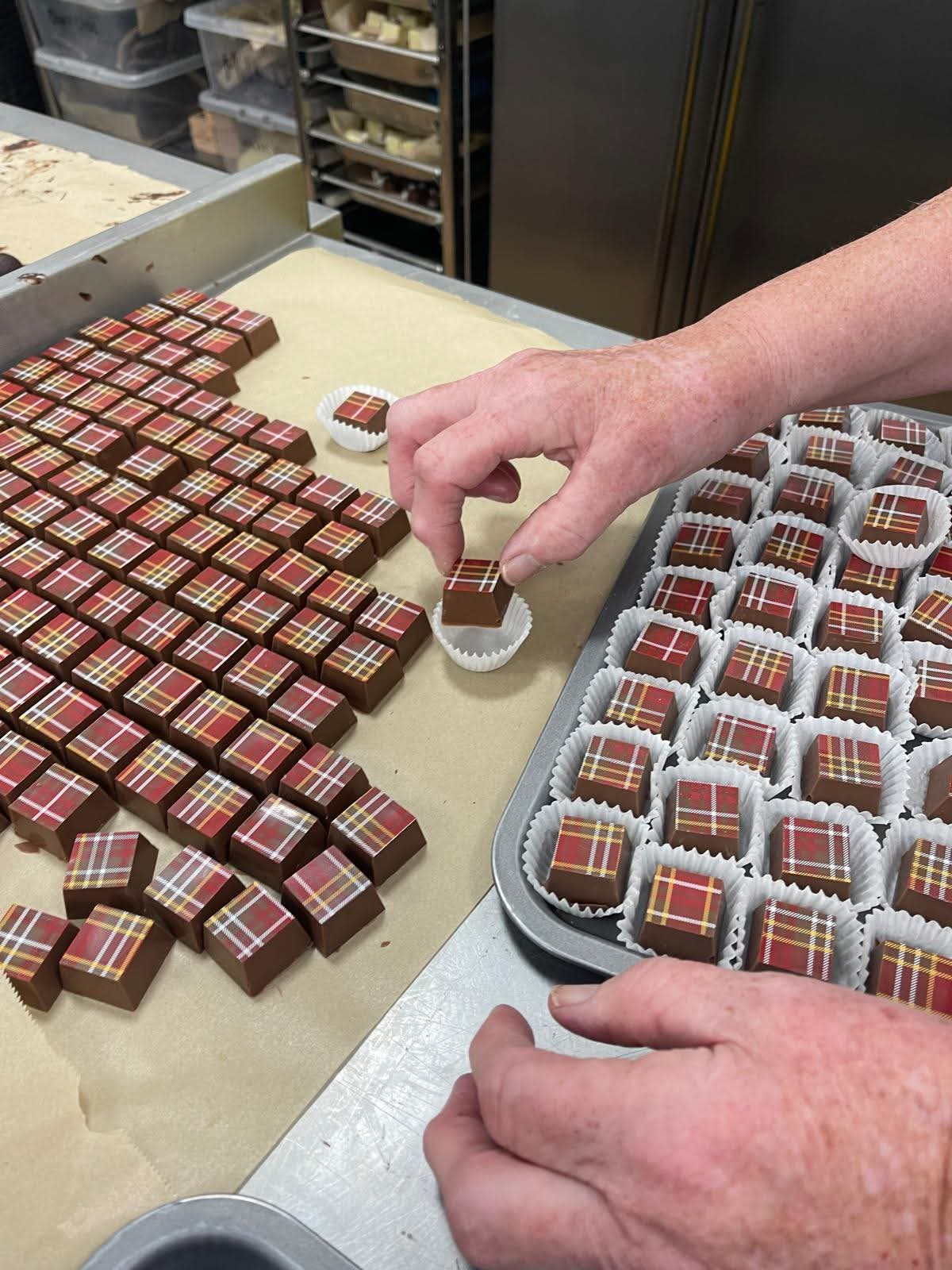
Last week, eight years later at Lady Val Corbett’s Professional Women’s networking lunch, I met Louise Humpington, CEO of Positive Changes, a CIC trading as Chocolate and Grace. The very same initiative that I had heard about all those years earlier. Louise became involved in July 2024.
This is the story of Chocolate & Grace, kindly written by Louise:

In a bustling kitchen in Stirling where the aroma of melting cocoa lingers, something more profound than chocolate is being crafted. Chocolate & Grace is not simply about indulgence; it is about empowerment, dignity, and rewriting futures.
At its heart, this initiative provides women who have lived experience of the justice system, with a safe, supportive space to heal, connect, and grow. Women describe the empowerment they feel when they are truly valued, treated with respect, and given the agency to rebuild their lives. Here, they are not defined by past mistakes but celebrated for their resilience, strength, and capacity for transformation.
Isolation is one of the silent challenges faced by many women leaving the justice system. Chocolate & Grace breaks that cycle by fostering community, reducing loneliness, and encouraging meaningful relationships. In doing so, it helps rebuild lives and, crucially, reduces reoffending—creating a positive ripple effect across society. The impact is not only personal but economic: lives rebuilt mean less strain on the public purse and a healthier, more connected community.

Every chocolate made is infused with purpose. Behind each truffle or bar is a story of hope, courage, and determination. Alongside training and employment opportunities, the program offers trauma-informed support and a platform for women’s voices to be heard, acknowledged, and amplified. The women are credited not as passive recipients of help, but as active changemakers who demonstrate extraordinary commitment to transformation.
Chocolate & Grace is proof that with compassion, respect, and opportunity, cycles can be broken. It is a movement that blends social impact with sweet creativity—reminding us that true empowerment is not given but cultivated, one act of grace, one piece of chocolate, one woman at a time.
But this approach isn’t just important for the women being supported by Chocolate & Grace, it also represents a critical redefining of what leadership and success look like.
This change matters not only because it corrects decades of narrow norms, but because it unlocks better outcomes for organisations, teams, and society. One in four people in the UK will have had been subjected to Adverse Childhood Experiences or some other trauma. Better recognising how marginalised groups and disenfranchised people can contribute because of their lived experience and not in spite of it, is not, therefore a nice to have, it’s a fundamental shift that society needs.
When we value difference, leadership becomes more human. It shows the value of connection, trust, and authenticity as strengths, not liabilities.
It shifts the metrics by creating a space where success isn’t defined solely by outcomes like profit, efficiency or hierarchy. Wellbeing, purpose, sustainability, inclusion are finding a space and making leadership more holistic and resilient in turbulent times.
When the rules are reworked, it opens up space for diverse voices that have been traditionally marginalised or excluded. It empowers people, amplifies their voices and revers the value of their perspective.

There is no question that challenges remain, but as we continue to push boundaries and challenges status quo, momentum builds. Systemic obstacles (bias, unequal expectations, lack of access) still create barriers. But as more women lead by new norms, those norms themselves become harder to ignore or dismiss. We are changing the normative landscape in leading by example, and in amplifying the voices of those who have the most to teach us about what it is really like to succeed in the face of adversity.
The chocolates are delicious, if you would like to support this inspiring organisation have a look at their shop and treat yourself (and others) https://www.chocolateandgrace.co.uk/collections

Dichotomy of Lived v Learned Experience
I first stepped foot in a prison in 2010; I was invited to be a community witness for a victim awareness course at HMP/YOI Hollesley Bay, around 40 minutes’ drive from my home. The environment was unfamiliar and so were the attendees. At that time, I was approaching my final year at University studying for BSc (Hons) Criminology, as a mature student, and I needed to figure out what my next steps should be. Each presentation I prepared as part of my coursework steered towards the justice system, prisons in particular. The first being a 10 minute talk on the Corston Report, by Baroness Jean Corston, published in the light of 6 women dying within a year in Styal prison.
I still remember the feedback I received as it was rather disheartening “Who is interested in women in prison?”
It soon became clear to me that very few were interested in prisons at all, both fellow students and lecturers.
Undeterred I carried on, highlighting where possible the appalling issues within the prison estate.
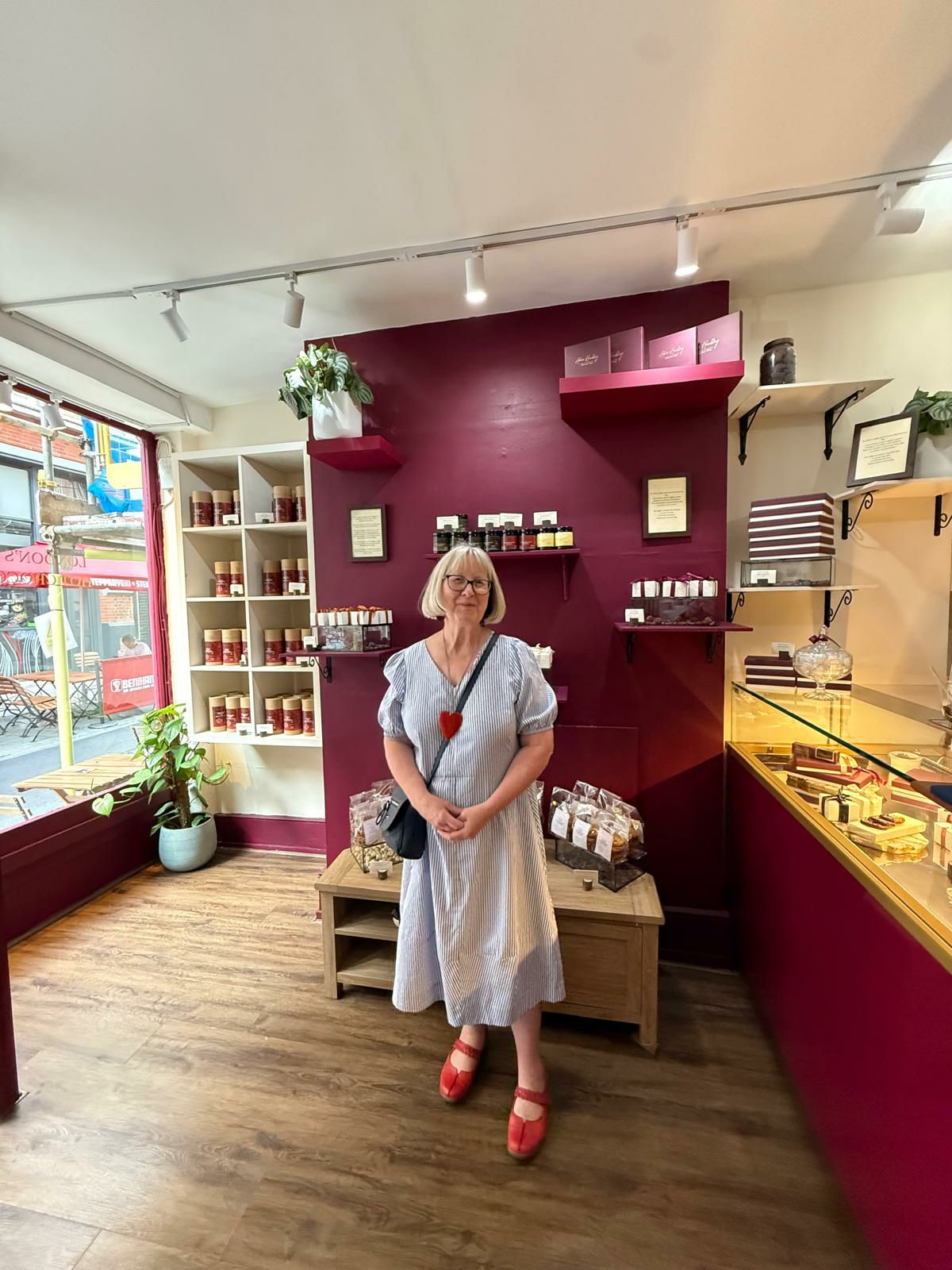
So, 15 years on, I have had the privilege to visit every category of prison up and down the country including the Women’s estate. I have delivered training in prisons, monitored a Cat D prison and became the Chair of an Independent Monitoring Board (IMB), attended numerous prison art exhibitions, toured prisons on the invitation of Governors, watched graduation celebrations for those that have completed courses in a Cat B, listened to guest speakers in prison libraries, judged a debating competition in a Cat C, written and edited policy documents and have published countless blogs that have been read and shared in over 150 countries. I have tirelessly spoken out for reform, and my work has been mentioned in the House of Lords.
I have seen the desperation, and I have felt the fear in prison, yet I have never resided in a prison.
“Well, what do you know?”
This question often ringing in my ears, as though I have just popped in from another planet.
“You don’t have lived experience”
A statement that is levelled against me far too many times to remember along with being White, A woman and Middle class…etc.
“Why is your writing so negative, instead of writing about problems, come up with solutions?”
It’s true, I don’t have a certain kind of “lived experience”, I’ve never stood in court accused of a crime and pleaded guilty or not guilty. I’ve never attended court awaiting my fate when the sentence is being read out.
I have sat and watched trials in the Supreme Court, the High Court and the courts in my local area. I have attended inquests and have given evidence, but most importantly I have been there for others, in court, supporting and comforting.
We all have lived experiences in some form. Personal lived experience of the justice system gives valuable insight, but does it make you an expert?
Surely, we can all work together to bring about much needed reform in our all too often failing system.
I believe there is a place for all who share a desire, a passion and determination to transform our criminal justice system into a fairer and more just structure. To give those that are or have been in prison the tools to rebuild or even build their lives for the first time. To give hope and a future.
Should lived experience and learned experience go hand in hand?
Do you think both are credible experts to whom we should be listening?
However, recently we have read about an individual with lived experience that became a valuable member of a prominent reform organisation, given responsibilities and then defrauded their employer.
This wasn’t a small amount, it was over £300,000. The organisation – Prison Reform Trust (PRT). They had appointed an individual with a previous fraud conviction for a senior role involving financial responsibility. Little by little right under the nose of the board of trustees, with the then Chairman who is now the Minister of State for Prisons, Probation and Reducing Reoffending. The current CEO, the former Head of Women’s prison estate was quick to say: “We would like to assure our supporters that no programmes or services were affected by this incident, and the charity remains committed to its mission to create a just, humane and effective prison system”.
Basically the money wasn’t missed?
That quote came from this statement on 19 May 2025 which has now been removed from the PRT website, so I have included a screenshot of it.

So where were the safeguards?
This case reminded me of 2021 when I received the Prison Reform Trust (PRT) booklet to commemorate their 40 years, after having attended their celebration in London. A short time afterwards I read the former CEO of The Howard League, Frances Crooks (farewell) piece.
PRT and The Howard League are two organisations that work for reform, two organisations that basically admitted they had failed in what they set out to do.
So why is so much money ploughed into them through donations, grants, membership, and legacies?
Both have an annual salary bill of over £1M, astonishing isn’t it. Yes, they have initiated some important campaigns, but our prisons are still in crisis and reform is taking too long.
So, what is going wrong?
Does the Ministry of Justice (MoJ) squeeze organisations and charities by limiting their progress and their ability to instigate change? Many rely on either their approval or their funding.
As you can deduce, I’m not here to popularise organisations, or to popularise individuals.
I am fiercely independent and intend to stay that way.
But I have many questions.
Was the system designed to be ineffective or designed to perpetuate harm?
Should prison be a place for healing as I have heard others say, or a place for true reform of itself or individuals?
Do we try and change something that does not want to change, does not want reforming, where politicians gaze briefly at and when those in a position to do something, don’t?
It is a place where inspectors inspect and issue recommendations, a place where monitors monitor and issue recommendations.
Endless reports and endless reviews.
Endless round table meetings.
New committees formed.
Let’s just step away for a moment.
I hear big voices, big egos and big personalities shout out, but no one can hear anything anymore.
Has society closed their ears to the noise?
Has society closed their eyes to the mess?
I will say again “Our prisons are in crisis and reform is taking too long”
Vision is often personal, but a cause is bigger than any one individual
People don’t generally die for a vision, but they will die for a cause
Vision is something you possess, a cause possess you
Vision doesn’t eliminate the options; a cause leaves you without any options
A good vision may out live you, but a cause is eternal
Vision will generate excitement, but a cause generates power
[Adapted from Houston (2001)]
You can have lived or learned experience, but what is your cause?
If the cause is yourself, this is not true reform, it is perpetuating the system with a sense of power.
If you have a cause and integrity you are seen as an interrupter.
But the greatest power is humility either lived or learned.

Keir Starmer whips AGAINST Lord Thomas amendment to end shocking #IPP scandal as campaigners vow to fight on
Campaigning Lawyer and CEO of CAMPAIGN FOR SOCIAL JUSTICE Peter Stefanovic – who’s films have been watched hundreds of millions of times online – has posted a new film calling on Prime Minister Keir Starmer to end the IPP scandal once and for all by adopting a plan drawn up by Lord Thomas, the former Lord Chief Justice.

BACKGROUND
IPP sentences were introduced in England and Wales by the then New Labour government with the Criminal Justice Act 2003. It sought to prove it was tough on law and order by putting in place IPP sentences to detain indefinitely serious offenders who were perceived to be a risk to the public. However, they were also used against offenders who had committed low-level crimes, resulting in people spending 18 years in jail for trying to steal a coat or imprisoned for 11 years for stealing a mobile phone. In one instance 16 years in jail for stealing a flowerpot.
UNLAWFUL
In 2012, after widespread condemnation and a ruling by the European court of human rights that such sentences were, “arbitrary and therefore unlawful”, IPP terms were abolished by the Conservative government. But the measure was not retrospective, and thousands remain in prison.
Over 90 people serving sentences under the discredited IPP regime have sadly taken their own lives whilst in prison. In 2023 we saw the second year in a row of the highest number of self-inflicted deaths since the IPP sentence was introduced.
Former supreme court justice Lord Brown called IPP sentences: “the greatest single stain on the justice system”. When Michael Gove was justice secretary, he recommended, “executive clemency” for IPP prisoners who had served terms much longer than their tariffs. But he didn’t act on it. Lord Blunkett, the Labour Home Secretary who introduced the sentences, regrets them, stating: “I got it wrong.” And more recently, Dr Alice Edwards, the UN rapporteur for torture has called IPP sentences an “egregious miscarriage of justice.” Even former Justice Secretary Alex Chalk KC has called them a stain on the justice system, yet despite that, the previous Conservative Government refused to implement the Justice Committees recommendation to re-sentence all prisoners subject to IPP sentences.
CAMPAIGN FOR SOCIAL JUSTICE
Their families and campaign groups have been fighting to end this tragic miscarriage of justice for more than a decade and films posted online by social media sensation and campaigner Peter Stefanovic have ignited a wider public storm on this tragic miscarriage of justice gathering millions of views.
You can watch Stefanovic’s latest film here:
https://x.com/peterstefanovi2/status/1937394593672089988?s=46&t=g6PUk4YExrOYprJSzQZ3lw
It is not surprising that the public reaction to his films have been one of shock, outrage, and disbelief.
PUBLIC SUPPORT
Stefanovic has said: “The public support for my films has been overwhelming and the comments they are getting are a testament to the public’s anger, outrage and disbelief at this tragic miscarriage of justice.”
HOPE FOR JUSTICE
Now – the Labour government is being given the chance to end this monstrous injustice once and for all by adopting a plan drawn up Lord Thomas, the former Lord Chief Justice.
An expert working group convened by The Howard League and led by Lord Thomas has come forward with considered proposals aimed at protecting the public while ending the long-running IPP scandal.
Below are the members of the working group:
Farrhat Arshad KC, barrister
Dr Jackie Craissati, clinical and forensic psychologist
Andrea Coomber KC (Hon), Chief Executive of the Howard League for Penal Reform
Dr Laura Janes KC (Hon), solicitor
Dr Frances Maclennan, clinical psychologist
Andrew Morris, served IPP sentence
Dr Callum Ross, forensic psychiatrist
Claire Salama, solicitor Sir John Saunders, retired High Court judge and former Vice Chair and member of the Parole Board
Professor Pamela Taylor, psychiatrist and academic
Paul Walker, Therapeutic Environments Lead for the OPD Pathway (HMPPS)
The working group’s report puts forward six recommendations – the most important of which is a change to the Parole Board test which would require the Parole Board to give people on IPP sentences a certain release date, within a two-year window, and to set out what action is required to achieve that safely.
Setting a date of up to two years provides a long period of time to enable professionals and statutory agencies to work together and help the person to prepare for a safe release – it completely knocks on the head any argument the justice secretary has previously raised about public safety and will end once and for all one of the most cruel and monumental injustices of the past half century.
Campaigners have hit out at the “short-sighted” decision not to include prisoners on indefinite sentences in the plans announced by the government to reduce the prison population.
The government has recently published its long-awaited sentencing review, led by former Conservative justice secretary David Gauke, who recommended that some offenders who behave well in jail only serve a third of their term in custody before being released. Yet the Chair of the Justice Committee, Andy Slaughter MP has raised the point recently that “Even if David Gauke’s recommendations are wholly successful the prisons will still be full, and this has unintended consequences.”
With Government Ministers saying they have inherited a prison system “on verge of collapse” Stefanovic says this is “nonsensical”.
He concludes his latest film saying:
“With our prisons at breaking point now is the time for James Timpson – the prisons minister and Labour peer to accept this sensible, workable and detailed plan and seek to close this shameful chapter in the history of British criminal justice. If the Justice Secretary refuses to sign off on this plan for fear of handing ammunition to ignorant critics who accuse her of being soft on crime the Prime Minister, a former director of public prosecutions, who understands the criminal justice system better than any minister should instruct her to act on the proposals – because the simple fact is that by refusing to do so Keir Starmer’s government would become responsible for allowing one of the most cruel, inhumane and monumental injustices of the past half-century – a scandal rightly described as a stain on our justice system – a scandal described by the UN rapporteur for torture as an egregious miscarriage of justice and psychological torture – and which likely breaches Article 3 of the Human Rights Act – to be continued and perpetrated – and I for one cannot believe that that is what a Labour government would want to happen”
Update:
We have now found out that Keir Starmer has whipped against Lord Thomas to end this shocking IPP scandal.
Latest Posts
-
A Story of Two Brothers: Rob and Roddy
Without overstating this issue, I am now persuaded that IPP is a matter of life and death. The story of Roddy and his brother Rob…
-
‘Letting Abusers Out Early: Solving the Prison Crisis’ | Battle of Ideas 2026
I don’t believe that letting abusers out early will solve the prison crisis. And neither should you. Speech by Faith Spear FRSA given at Battle…
-
CAMPAIGNING LAWYER PETER STEFANOVIC BACKS NUCLEAR TEST VETERANS CALL TO PM ANDY BURNHAM FOR JUSTICE
Peter Stefanovic, a lawyer and CEO of CAMPAIGN FOR SOCIAL JUSTICE whose films have been watched over a billion times has produced another shocking video…
-
A Conversation with: Andy Aitchison, prison photographer
Using photos in telling a story I first met Andy Aitchison in the Autumn of 2025, at the House of Lords. I had been aware…

